Upholding Hue famous folk painting

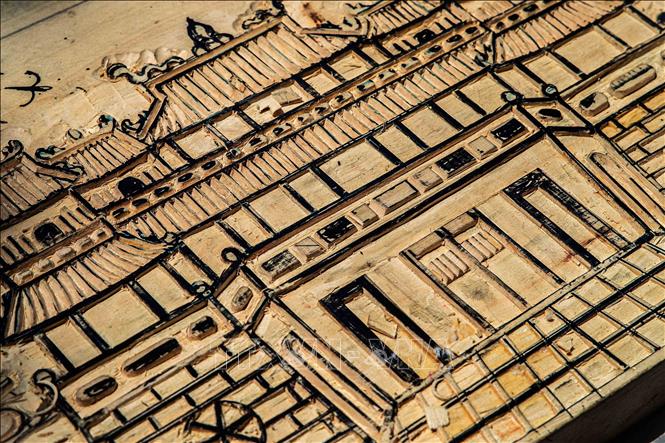
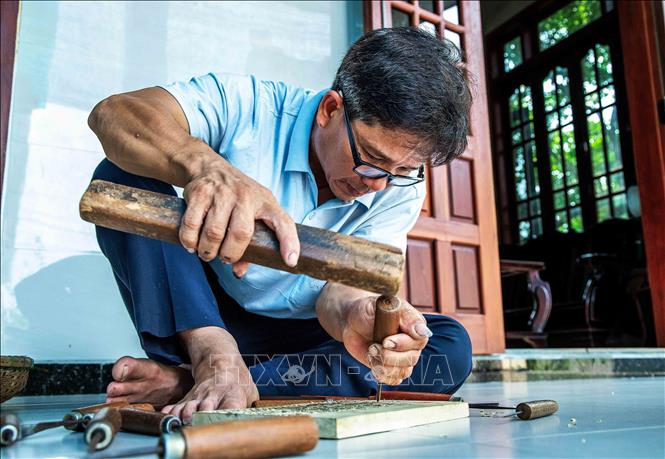
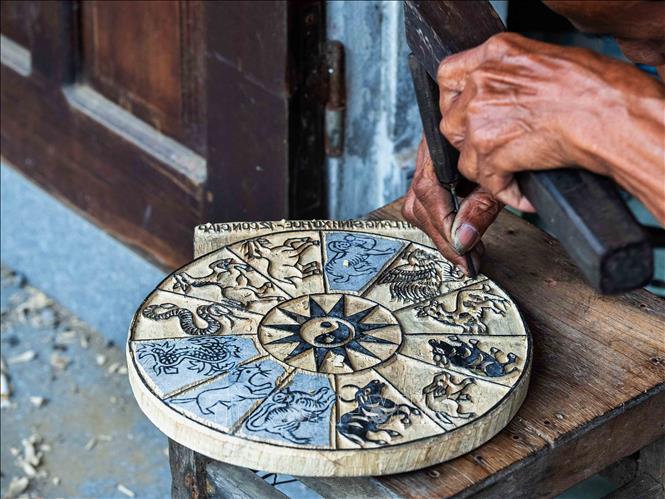
  • Sinh folk painting is created from patterned woodblock. Woodblock carving not only requires strength and perseverance but also memory and visual thinking; the craftsman must carve completely in reverse compared to the printed image; every line and pattern is
    Sinh folk painting is created from patterned woodblock. Woodblock carving not only requires strength and perseverance but also memory and visual thinking; the craftsman must carve completely in reverse compared to the printed image; every line and pattern is "reversed". VNA Photo: Vân Chi/Photo by courtesy
  • The wood used for woodblock printing is usually ebony, persimmon, or other types of wood with fine grain and good drainage, which helps the carvings retain their sharpness. VNA Photo: Vân Chi/Photo by courtesy
    The wood used for woodblock printing is usually ebony, persimmon, or other types of wood with fine grain and good drainage, which helps the carvings retain their sharpness. VNA Photo: Vân Chi/Photo by courtesy
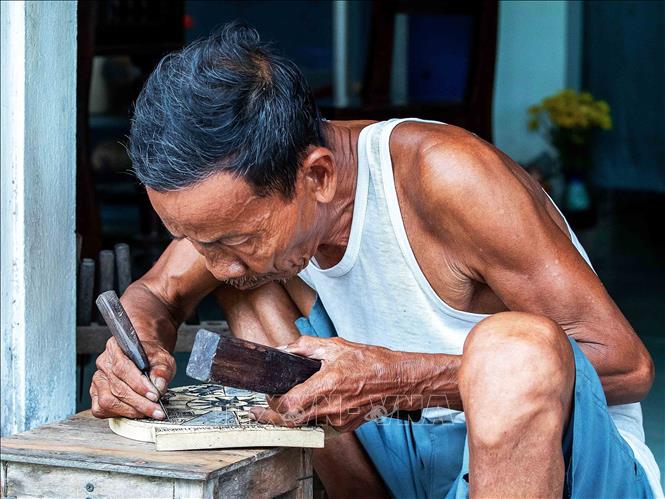
  • Artisan Ky Huu Phuoc (77 years old) is the 9th generation descendant of the Sinh village painting family. There was a time when this art form was considered superstitious; he secretly buried all the woodblocks to preserve them, thus helping to revive the art form from the brink of extinction. VNA Photo: Vân Chi/Photo by courtesy
    Artisan Ky Huu Phuoc (77 years old) is the 9th generation descendant of the Sinh village painting family. There was a time when this art form was considered superstitious; he secretly buried all the woodblocks to preserve them, thus helping to revive the art form from the brink of extinction. VNA Photo: Vân Chi/Photo by courtesy
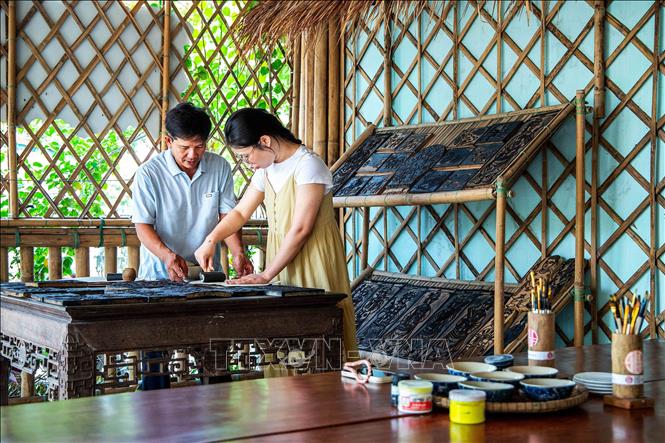
  • The exhibition corner showcasing Sinh village paintings at the artist's home is not only a place to preserve woodblock prints but also a space for visitors to experience and better understand the value of a painting style that has existed for over four centuries. VNA Photo: Vân Chi/Photo by courtesy
    The exhibition corner showcasing Sinh village paintings at the artist's home is not only a place to preserve woodblock prints but also a space for visitors to experience and better understand the value of a painting style that has existed for over four centuries. VNA Photo: Vân Chi/Photo by courtesy
  • The
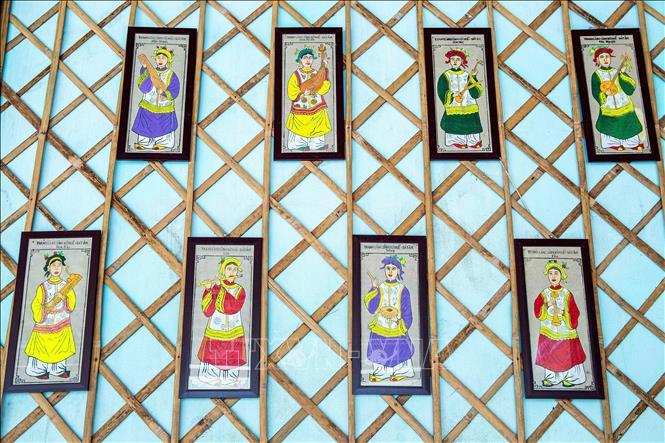
    The "Eight Sounds" set is one of the most valuable works of art in the Sinh village painting tradition. The images of girls in traditional costumes performing on musical instruments embody the graceful and refined beauty of Hue. VNA Photo: Vân Chi/Photo by courtesy
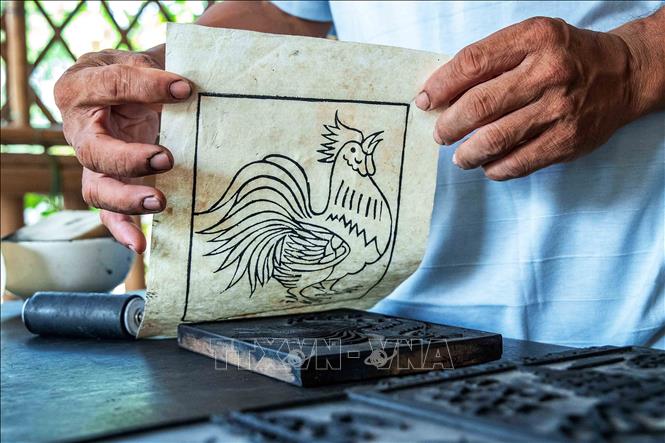
  • Unlike other types of printed paintings with multiple color blocks, Sinh village paintings only use woodblocks to define the outlines, and then the coloring process is done manually, creating a unique piece for each painting. VNA Photo: Vân Chi/Photo by courtesy
    Unlike other types of printed paintings with multiple color blocks, Sinh village paintings only use woodblocks to define the outlines, and then the coloring process is done manually, creating a unique piece for each painting. VNA Photo: Vân Chi/Photo by courtesy
  • According to artisan Pham Cong Khai (51 years old), currently in Sinh village, besides artisan Ky Huu Phuoc, he is the only one who continues to maintain the craft, possessing and fully practicing the technique of woodblock printing for paintings. VNA Photo: Vân Chi/Photo by courtesy
    According to artisan Pham Cong Khai (51 years old), currently in Sinh village, besides artisan Ky Huu Phuoc, he is the only one who continues to maintain the craft, possessing and fully practicing the technique of woodblock printing for paintings. VNA Photo: Vân Chi/Photo by courtesy
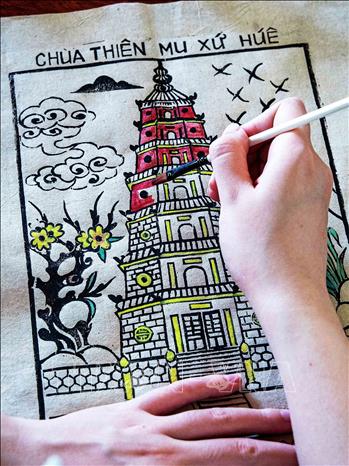
  • To cater to tourism, artisan Pham Cong Khai has created additional woodblock prints depicting Hue's scenic spots such as Thien Mu Pagoda and Truong Tien Bridge, transforming Sinh Village paintings from a form of spiritual art into a unique souvenir product. VNA Photo: Vân Chi/Photo by courtesy
    To cater to tourism, artisan Pham Cong Khai has created additional woodblock prints depicting Hue's scenic spots such as Thien Mu Pagoda and Truong Tien Bridge, transforming Sinh Village paintings from a form of spiritual art into a unique souvenir product. VNA Photo: Vân Chi/Photo by courtesy
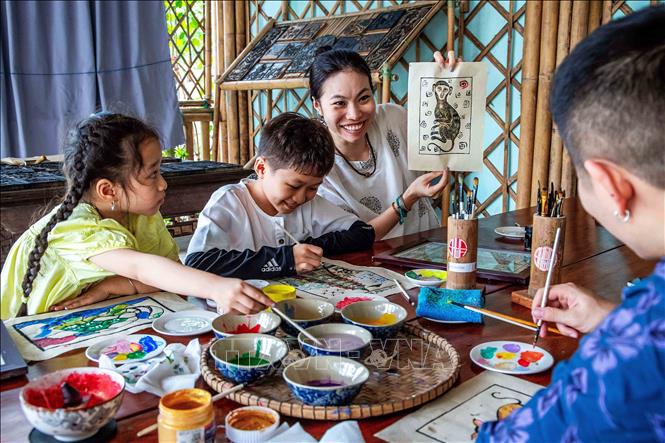
  • Visitors enjoy creating a Sinh village's folk painting. VNA Photo: Vân Chi/Photo by courtesy
    Visitors enjoy creating a Sinh village's folk painting. VNA Photo: Vân Chi/Photo by courtesy
Sinh village in the central city of Hue has lived for nearly 450-year-old in the spiritual life of Hue ancient capital with its tradition of folk painting. These iconic artworks are more than just a testament to artistic craftsmanship. They're a profound reflection of the region's spiritual and cultural identity, making Sinh Village a unique gem of the ancient capital. To preserve and revive this tradition, local authorities collaborated with artisan Ky Huu Phuoc to organize training classes. These efforts empowered locals to open craft workshops, blending their artistry with experiential tourism to breathe new life into the heritage. Despite various challenges, the craft of Sinh folk painting is gradually revived and promoted. VNA Photo: Vân Chi/Photo by courtesy

Latest news

TTXVN