Khai Dinh Tomb - Nguyen dynasty’s last royal tomb

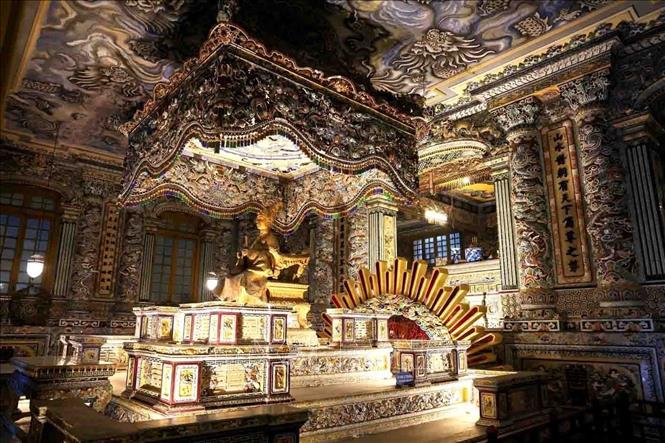
  • Bronze gilded statue of Emperor Khai Dinh sitting was casted on a 1: 1 scale in France in 1922. VNA Photo
    Bronze gilded statue of Emperor Khai Dinh sitting was casted on a 1: 1 scale in France in 1922. VNA Photo
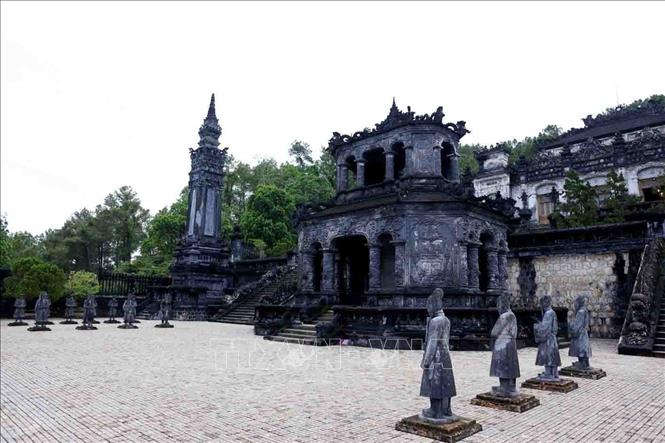
  • The influence of foreign architectural styles, ranging from Hinduism to Buddhism, Roman and Gothic, has left its imprint on specific constructions in Khai Dinh Tomb. VNA Photo
    The influence of foreign architectural styles, ranging from Hinduism to Buddhism, Roman and Gothic, has left its imprint on specific constructions in Khai Dinh Tomb. VNA Photo
  • Stone statues are carved in a 1: 1 ratio like real people. VNA Photo
    Stone statues are carved in a 1: 1 ratio like real people. VNA Photo
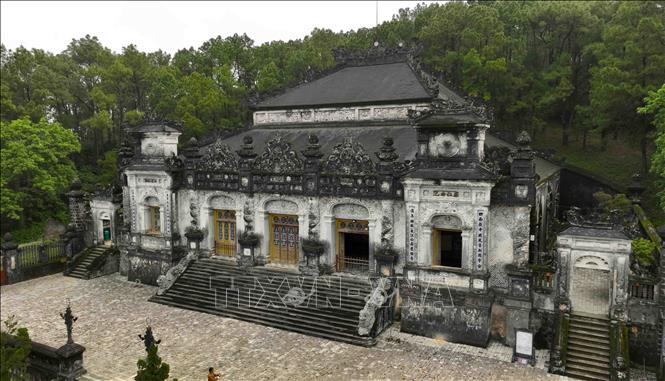
  • Thien Dinh Palace is at the 5th floor, the highest floor of the tomb complex. VNA Photo
    Thien Dinh Palace is at the 5th floor, the highest floor of the tomb complex. VNA Photo
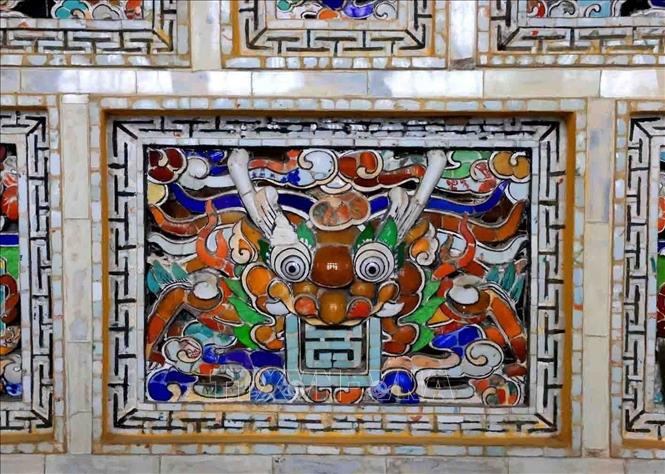
  • The decoration on the altar is grafted with porcelain and glassware, with motifs of dragons, clouds, seasonal flowers and treasures. VNA Photo
    The decoration on the altar is grafted with porcelain and glassware, with motifs of dragons, clouds, seasonal flowers and treasures. VNA Photo
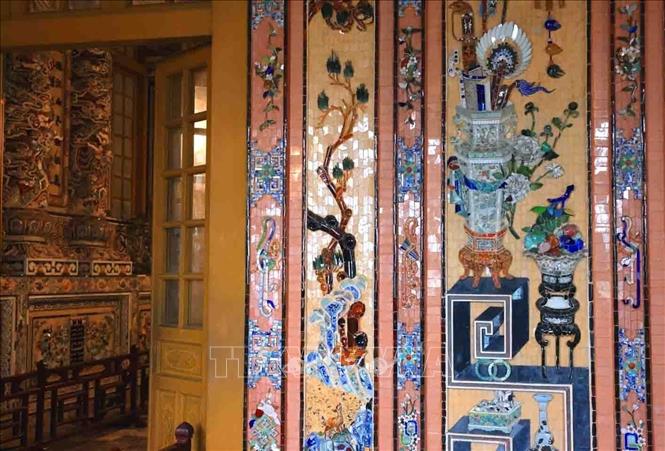
  • The walls inside the tomb are decorated with exquisite porcelain and glass sculptures, painting the beauty of four seasons. VNA Photo
    The walls inside the tomb are decorated with exquisite porcelain and glass sculptures, painting the beauty of four seasons. VNA Photo
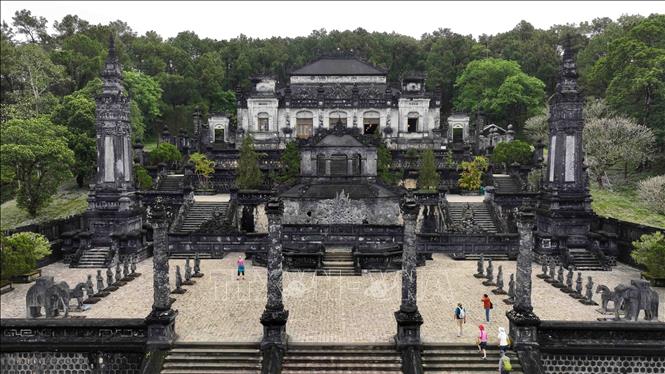
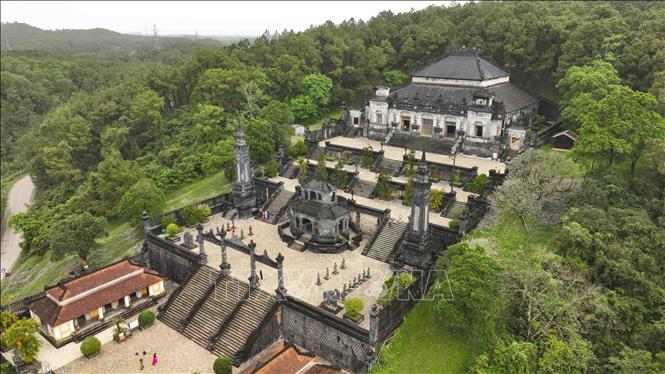
  • The tomb is of a rectangular structure leaning against Chau Chu mountain in the outskirts of Hue. It is largely made of concrete, steel, iron, and slate, as opposed to traditional wood or brick. VNA Photo
    The tomb is of a rectangular structure leaning against Chau Chu mountain in the outskirts of Hue. It is largely made of concrete, steel, iron, and slate, as opposed to traditional wood or brick. VNA Photo
Khai Dinh Tomb, situated on Chau Chu mountain, approximately 10 kilometers away from the heart of Hue, is the final architectural work of the Nguyen dynasty. It is widely regarded as one of Vietnam's most exemplary structures due to its innovative use of Western materials and designs. The Tomb, officially known as Ung Mausoleum, is built for Khai Dinh, the twelfth Emperor of Vietnam’s Nguyen dynasty. The land on which the tomb had been built was selected by Khai Dinh Emperor himself and construction works began in 1920. However, the Emperor passed away before its completion in 1925, and the tomb was completed in 1931 after 11 years of construction. Khai Dinh Tomb is renowned for its unique architectural style, a result of East-West cultural influence on Vietnam. VNA Photo

Latest news

TTXVN